Free and clear
In Arthur Miller's Death of a Salesman, the phrase "free and clear" crystallizes the central irony of the Loman family's long struggle. It refers to the moment when the twenty-five-year mortgage on the house is finally paid off, an achievement Linda Loman has worked toward for decades. Yet the liberation she announces comes not as a triumph but as a hollow victory, because the man who helped build the house and dreamed of owning it outright has just killed himself. The phrase thus becomes a measure of everything the Lomans sacrificed in the pursuit of a financial goal that, once reached, leaves them with nothing but an empty home.
The Mortgage and the Dream of Ownership
The Lomans bought the house when Biff was nine years old, and for twenty-five years the mortgage has been a constant pressure on the family finances. Willy Loman speaks of the house with pride, noting the cement, lumber, and reconstruction he put into it, boasting that "there ain't a crack to be found in it any more." But the house has also been a source of anxiety: Willy complains that he is "always in a race with the junkyard," paying for things just as they break. Linda, more practical, keeps track of every payment and reminds Willy that after the final payment, "the house belongs to us." The mortgage represents not just a debt but a promise of security, a tangible reward for a lifetime of labor.
The Final Payment and Its Tragic Timing
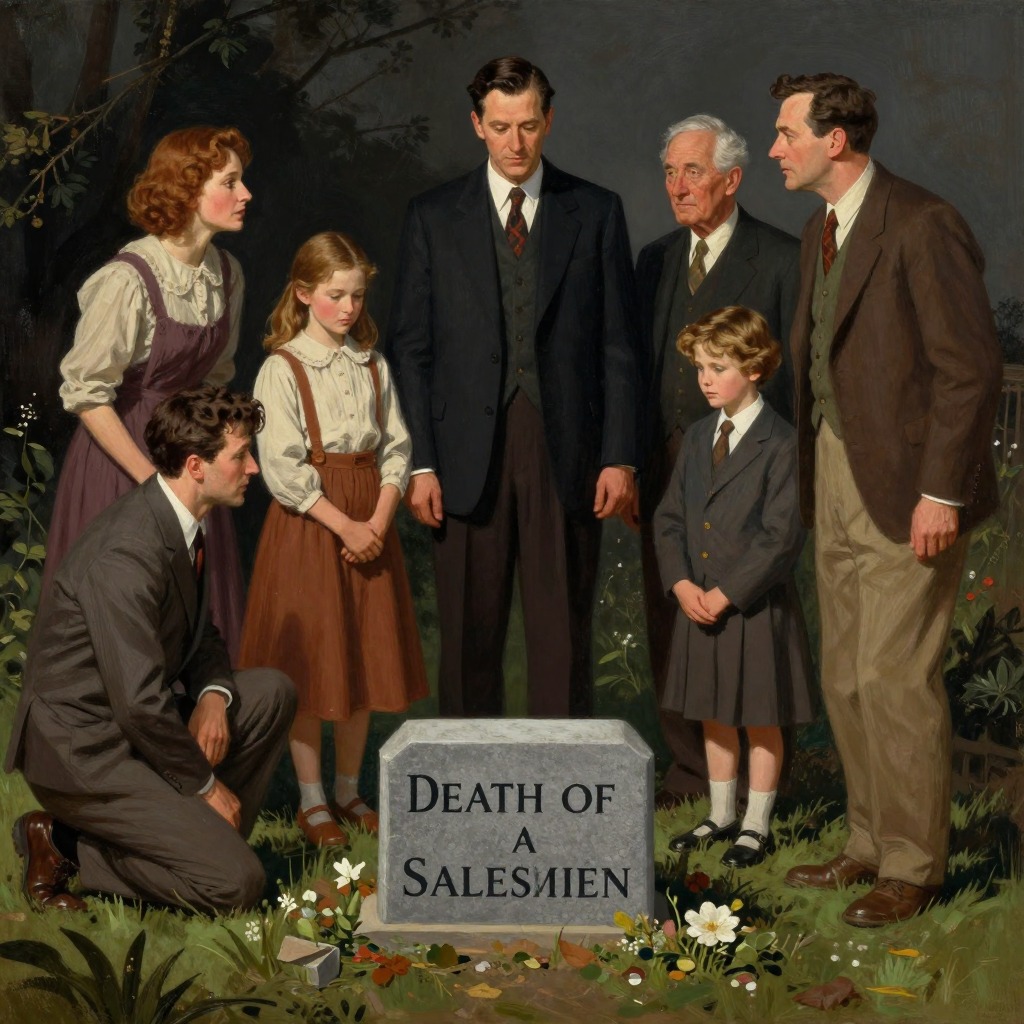
The last payment on the mortgage is made on the very day of Willy's funeral. Linda, kneeling at the grave, speaks the words that sum up the play's bitter arithmetic: "I made the last payment on the house today. Today, dear. And there'll be nobody home." The financial freedom she has waited for—"We're free and clear"—arrives at the exact moment when the family is shattered. The house, which was supposed to be a legacy for the children, stands empty. The phrase "free and clear" thus loses its conventional meaning of relief and becomes a lament for a freedom that comes too late to matter.
The Irony of Liberation
The concept of being "free and clear" is deeply tied to the American Dream that Willy Loman pursued. He believed that owning the house outright would prove his success, that it would be a monument to his hard work. But the play shows that the dream of financial independence is a trap: the Lomans spent their lives chasing a goal that, when finally achieved, only underscores their loss. Linda's repeated cry of "We're free" is not a celebration but a sob of recognition that freedom has no value when the person who worked for it is gone. The phrase becomes a critique of a society that measures worth by material ownership, leaving those who achieve it with nothing but an empty space.
Thematic Significance
"Free and clear" functions as the play's final verdict on the Lomans' pursuit of the American Dream. It exposes the gap between the promise of security and the reality of sacrifice. Willy Loman believed that paying off the mortgage would give his family a foundation, but the play demonstrates that the foundation was built on illusions. The phrase echoes Charley's earlier observation that "a salesman is got to dream," but here the dream has been fulfilled in the most hollow way possible. Linda's inability to cry, her search for understanding, and her final repetition of "We're free" all point to the emotional bankruptcy that accompanies the financial settlement. The house, once a symbol of hope, becomes a monument to a life spent chasing a goal that, in the end, offers no comfort.